 A dated calendar of Southeast Asia travel experiences
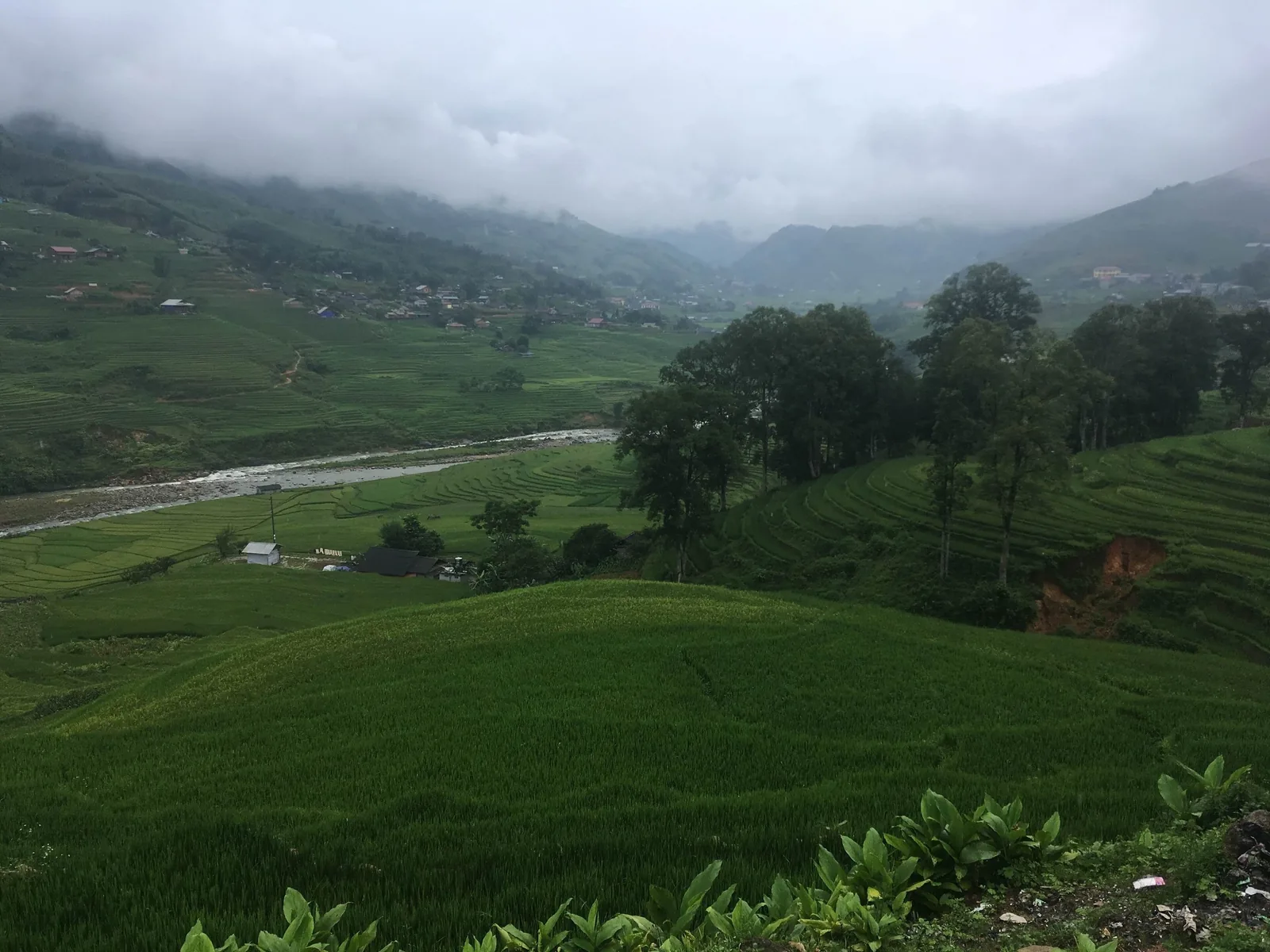
Calendar · Third quarter
July to September: rain, rice and rivers in flood
The third quarter is the wet season almost everywhere except the central Vietnamese coast. It is also when the rice on the northern terraces turns from green to gold, when waterfalls run at full flow, and when the typhoon season reaches the coast. Fewer visitors, lower prices and more weather risk.
The quarter at a glance
| Month | What is on | What to watch |
|---|---|---|
| July | Lantern night 17 July 2027; central coast still dry | Heaviest rain begins in Siem Reap and Luang Prabang; Phu Quoc stormy |
| August | Tu Le and Khau Pha rice ripening from mid-August; lantern night 15 August 2027 | Wettest month in Luang Prabang (about 329 mm) |
| September | Mu Cang Chai terraces golden from mid-September; Mid-Autumn on 15 September 2027; lantern night 14 September 2027 | Wettest month in Siem Reap; central Vietnam rains begin |
Sources: Tourist Bucket lunar and sun calculations (PyEphem, UTC+7), cross-checked with a Chinese-calendar library; Dan Tri International — 2026 rice season in Mu Cang Chai and Tu Le; Wikipedia — Luang Prabang climate table; Wikipedia — Siem Reap climate table; Vietnam National Authority of Tourism — weather and climate · last checked .
The rice turns gold in the north-west
The terraced fields of Mu Cang Chai cover more than 2,300 hectares at about 1,000 m, and 500 hectares were recognised as a national landscape in 2007. The rice does not ripen everywhere at once. In 2026 the Tu Le valley and the villages at the foot of the Khau Pha pass were reported to look their richest from mid-August to early September, while La Pan Tan, Che Cu Nha and De Xu Phinh were usually most colourful from mid-September to mid-October. The whole season lasts about two months.
Mu Cang Chai was in Yen Bai province until the 2025 merger and is now in Lao Cai province; the commune lies about 300 to 350 km from Hanoi depending on the source and route. Local events cluster around the harvest: in 2026 a paragliding festival opened at the Khau Pha landing site on 30 August, and a Golden Season Festival with flute contests, costume displays and a trail race ran from 30 August into October.
Harvest is the moment the gold disappears. Once a field is cut it is brown stubble, so a trip timed for the very end of the season risks arriving after the work is done. Read the nature seasons page for how to time it.
Sources: Vietnam National Authority of Tourism — Mu Cang Chai terraced fields; Dan Tri International — 2026 rice season in Mu Cang Chai and Tu Le; VietNamNet — Golden Season Festival 2026, Mu Cang Chai; Vietnam National Authority of Tourism — the 34 new provincial names · last checked .
Mid-Autumn
The Mid-Autumn Festival, Tet Trung Thu in Vietnam, falls on the 15th day of the eighth lunar month: 25 September in 2026 and 15 September 2027 by our calculation. It is a children's festival in Vietnam, with lanterns, lion dances and moon cakes in the weeks before. In Hoi An the lantern night of that month falls a day earlier, on 14 September 2027.
Sources: Tourist Bucket lunar and sun calculations (PyEphem, UTC+7), cross-checked with a Chinese-calendar library · last checked .
Waterfalls at full flow, and the risk that comes with them
The wet season is when waterfalls across the region carry the most water, and it is also when they are most dangerous. The UK Foreign Office warns that in Thailand heavy rain can cause flash floods and that lakes, caves and waterfalls are particularly at risk; in Vietnam it lists swollen rivers in mountain areas and landslides that block roads during floods.
Practical consequences: swimming spots below falls may be closed after rain, the colour of the water turns from blue to brown, and mountain roads to the falls can be cut for hours or days. Leave slack in any itinerary that depends on a road through the mountains between July and September.
Sources: UK Foreign Office — Thailand safety and security; UK Foreign Office — Vietnam safety and security · last checked .
Typhoons and storms on the coast
The Vietnamese typhoon season normally runs from May to November along the east coast, according to the UK Foreign Office, with strong winds, heavy rain, flooding and disruption to transport, and storms can occur outside those months. Ha Long Bay sees rain and storms from June to August, and Phu Quoc is stormy from July to September. Boat trips are cancelled when warnings are issued, sometimes on the morning of departure.
The central coast, from Hue to Hoi An, remains dry and hot until August, and Nha Trang until the end of August. This makes July and August the quarter's most reliable months for the Hoi An lantern nights.
Sources: UK Foreign Office — Vietnam safety and security; Vietnam National Authority of Tourism — weather and climate · last checked .
Angkor in the rains
Siem Reap receives about 193 mm in July, 209 mm in August and 288 mm in September, its wettest month. Rain usually falls in heavy bursts rather than all day, and the moats and reflecting pools are full. Sunrise is early, around 05:44 to 05:53, and clouds often hide it. In exchange the temples are green and far less crowded.
Sources: Wikipedia — Siem Reap climate table; Tourist Bucket lunar and sun calculations (PyEphem, UTC+7), cross-checked with a Chinese-calendar library · last checked .
Who should skip this quarter
- Anyone whose trip depends on a boat night on Ha Long Bay or a fixed island ferry, given the storm cancellations.
- Travellers who cannot absorb a lost day on a mountain road in northern Vietnam or Laos.
- Those who want blue-sky sunrise photographs at Angkor.
- Visitors planning to swim below waterfalls; currents and flash floods are at their worst.
Common questions
Questions readers ask
When are the Mu Cang Chai rice terraces golden?
Tu Le and Khau Pha usually ripen first, from mid-August to early September; La Pan Tan, Che Cu Nha and De Xu Phinh are usually most colourful from mid-September to mid-October.
When is Mid-Autumn in 2027?
On 15 September 2027, the 15th day of the eighth lunar month, by our calculation.
Is it safe to visit waterfalls in the rainy season?
Viewing is usually fine; swimming is not advisable after heavy rain. Official advice warns that waterfalls are particularly exposed to flash floods.
Where is dry in July and August?
The central Vietnamese coast, including Hoi An, Hue and Nha Trang.
Related
Read next

Calendar · Second quarter
April to June
Songkran, Pi Mai Lao and Khmer New Year, Cuc Phuong fireflies and butterflies, and the start of the wet season.
Read more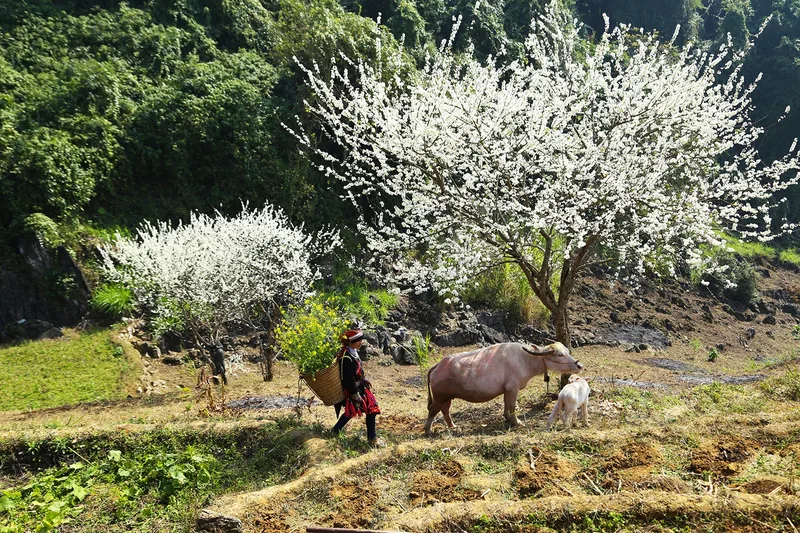
Calendar · Fourth quarter
October to December
Buckwheat blossom, Loi Krathong and Yi Peng, Bon Om Touk, Angkor's new dry season and the central coast floods.
Read more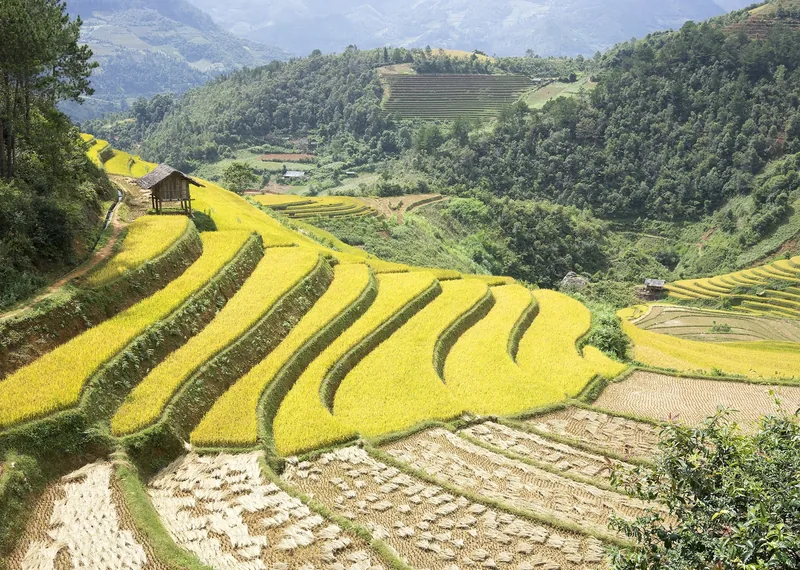
Nature seasons
Nature seasons
When the terraces turn gold, when buckwheat flowers on the Dong Van plateau, firefly evenings and monsoon waterfalls.
Read more
Planning
When not to go
Smoke season, typhoons, central Vietnam floods, extreme heat, holiday closures and advisories, with months.
Read more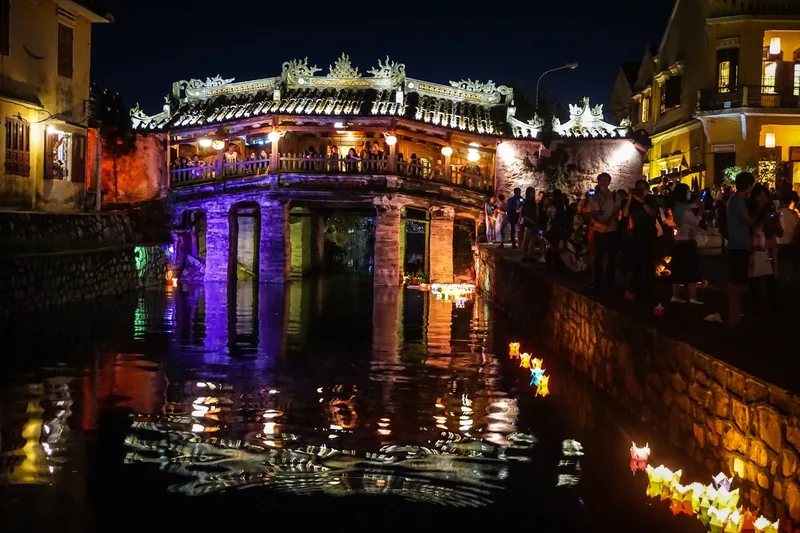
Festivals · Vietnam
Hoi An lantern nights
Every Hoi An lantern night through 2027, with the lights-off time, the old town ticket and the flood months.
Read more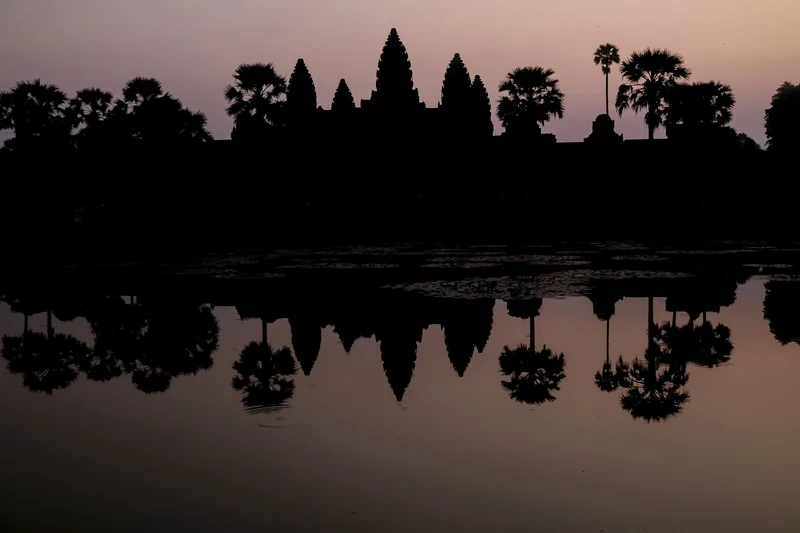
Seasons · Cambodia
Angkor sunrise season
Sunrise times by month at Angkor Wat, the official pass prices and hours, the sunrise temples and the Bakheng cap.
Read more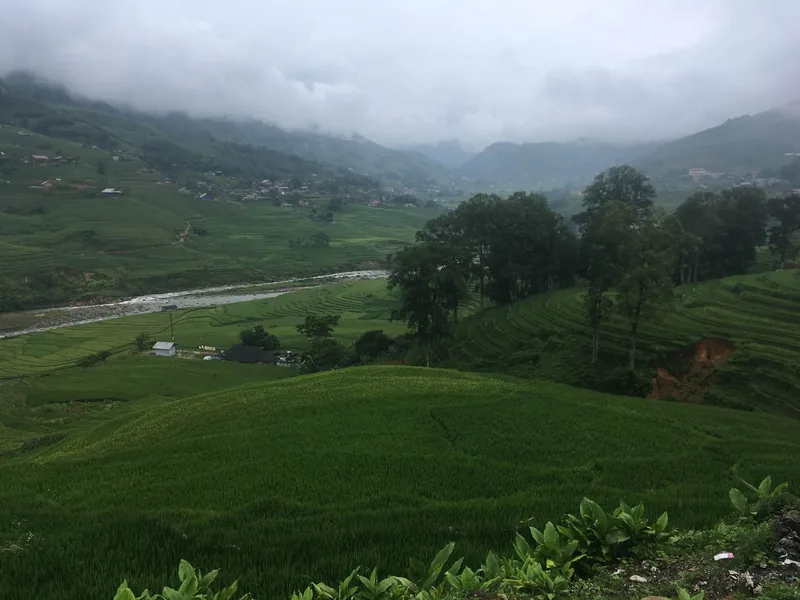
Start planning
Send a correction or a question
Tell us which page and which date you are writing about, what you found instead, and where you found it. A link to an official announcement helps us check it quickly.